
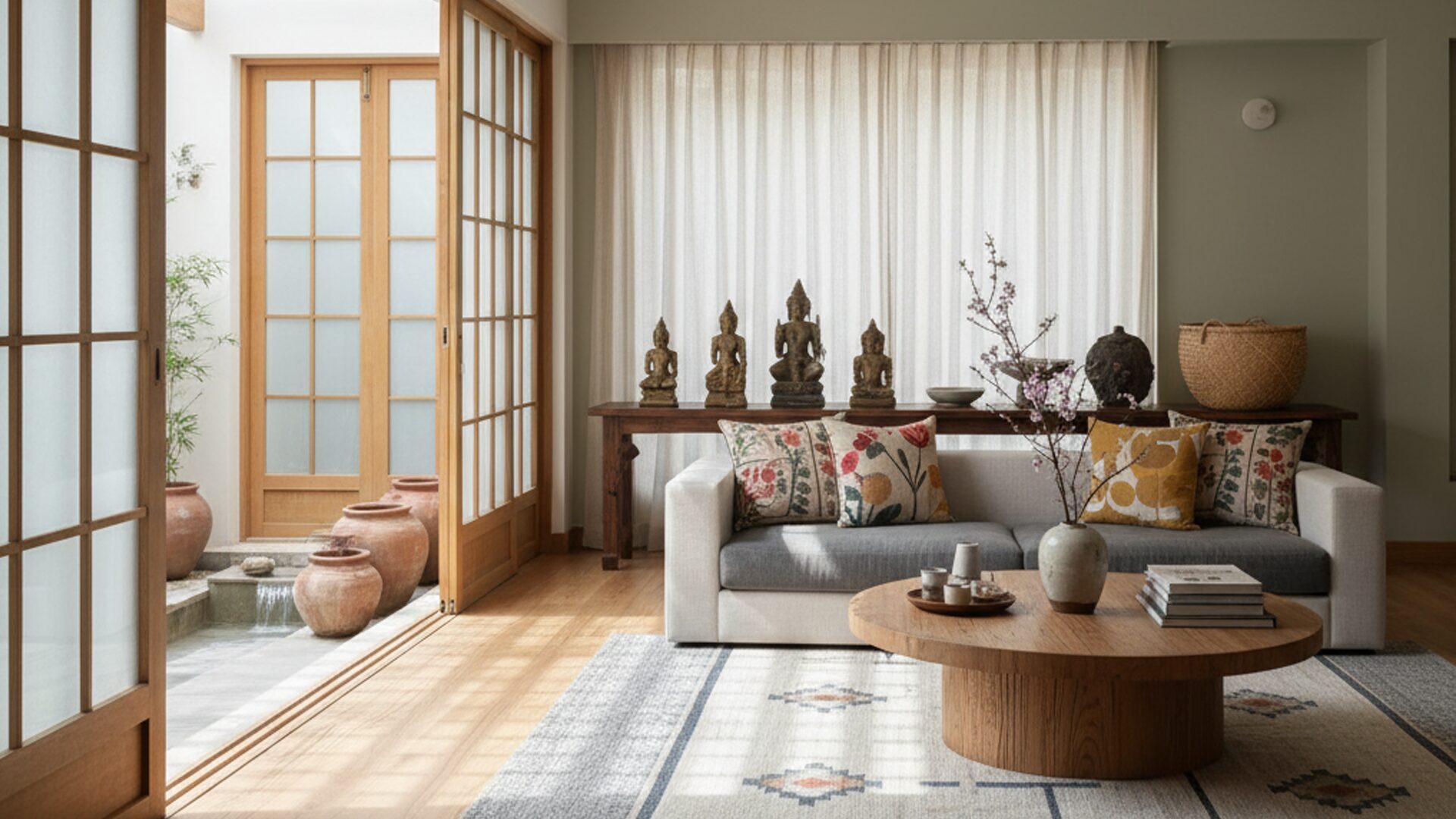
Simplicity has a subtle elegance, and Japandi’s interior design embodies this. Japandi design, which combines Scandinavian cosiness with Japanese minimalism, promotes balance through crisp lines, warm materials, and a deep sense of tranquillity. Can Indian households adopt this worldwide trend, though? Indeed, and exquisitely so.
Really, what is Japandi?
Japandi is an emotion rather than just a style. It’s about leading an intentional life and surrounding yourself with joyful and purposeful things. Imagine the cozy warmth of Scandinavian architecture combined with the peaceful tranquility of Japanese dwellings.
Consider:
- Subdued colours like charcoal, taupe, and beige.
- Wood, clay, bamboo, linen, and natural materials.
- Handcrafted furniture that is simple and useful.
- Gentle illumination that produces warmth rather than brightness.
Japandi essentially asks you to breathe in your own house.
Why does Japandi work so well for Indian homes?
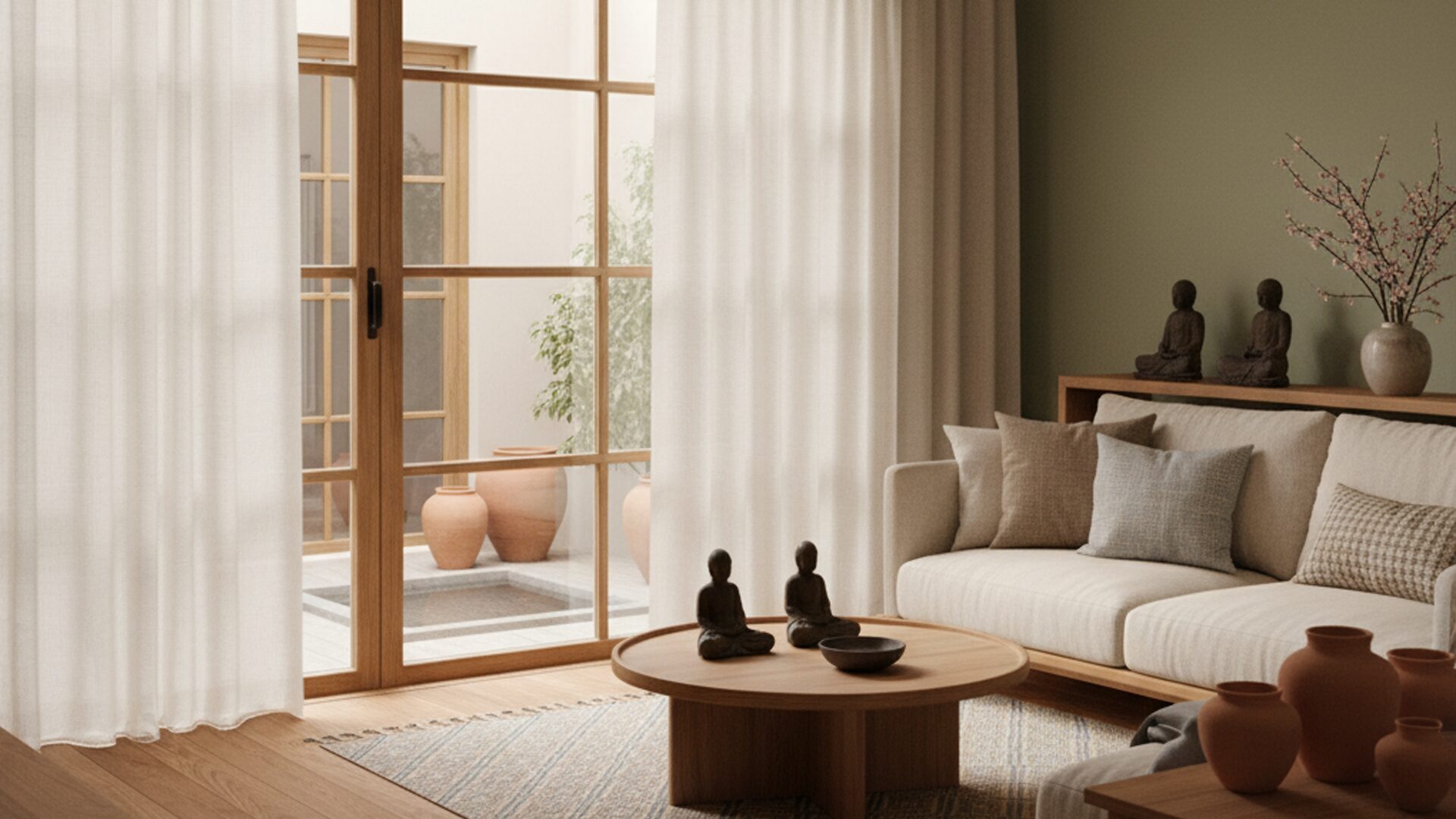
At first glance, Indian homes seem full of colour and culture, the opposite of minimalism. But look deeper, and you’ll see why Japandi fits perfectly in the Indian context.
- Functionality First – Our homes are active spaces. Japandi emphasises uncluttered layouts and multi-purpose modular interiors, ideal for compact city apartments.
- Natural Materials – Indian craftsmanship offers wood, cane, stone, and rattan — all rooted in Japandi’s organic philosophy. This aligns beautifully with a custom furniture and craftsmanship approach.
- Calming Aesthetic – With our fast-paced lifestyles, a soothing, balanced home brings mental peace, something every Indian family craves.
- Adaptable Warmth – Add traditional Indian homes that consist of textiles or brass accents within a neutral palette, and you’ve got a beautiful fusion of global style and local soul.
Why is Japandi such a great fit?
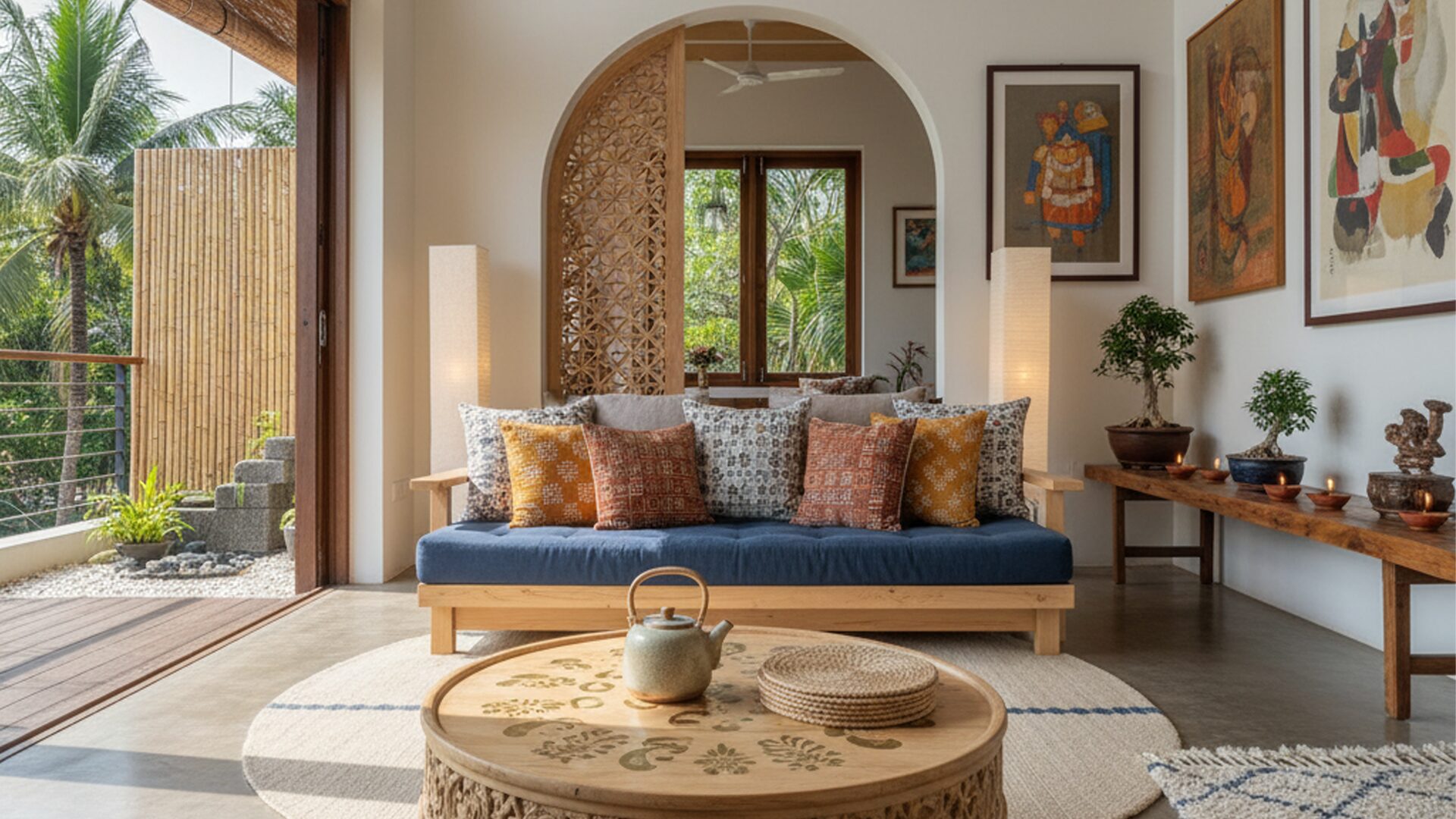
Indian homes appear to be the exact opposite of minimalism at first glance, full of colour and culture. However, a closer examination would reveal why Japandi is a wonderful fit for the Indian setting.
- Usability First – Our houses are busy places. Compact city flats are ideal for Japandi’s emphasis on clean design and multipurpose furniture.
- Natural Materials – Indian workmanship offers a wide range of options, including wood, cane, stone, and rattan, all of which complement Japan’s organic style.
- Calming Aesthetic – Given our hectic lifestyles, every Indian family longs for a peaceful, well-balanced house.
- Adaptable Warmth – You can create a stunning blend of international fashion and regional character by including traditional Indian textiles or brass accents in a neutral colour scheme.
How to bring Japandi into your space
You don’t need to redo your entire home. Start small — it’s about feeling serene, not stark.
- Declutter: Keep only what you love and use.
- Choose Natural Finishes: Wood, rattan, linen, and jute all help ground your interiors.
- Stick to Soft Colours: Think warm whites, greys, sand, and muted greens.
- Add Texture: Layer with cotton throws, clay pots, and handmade décor.
- Let the Light In: Natural sunlight and soft, warm lighting set the mood.
Over time, your home will naturally feel more open, balanced, and calm.
The new language of luxury: Japandi
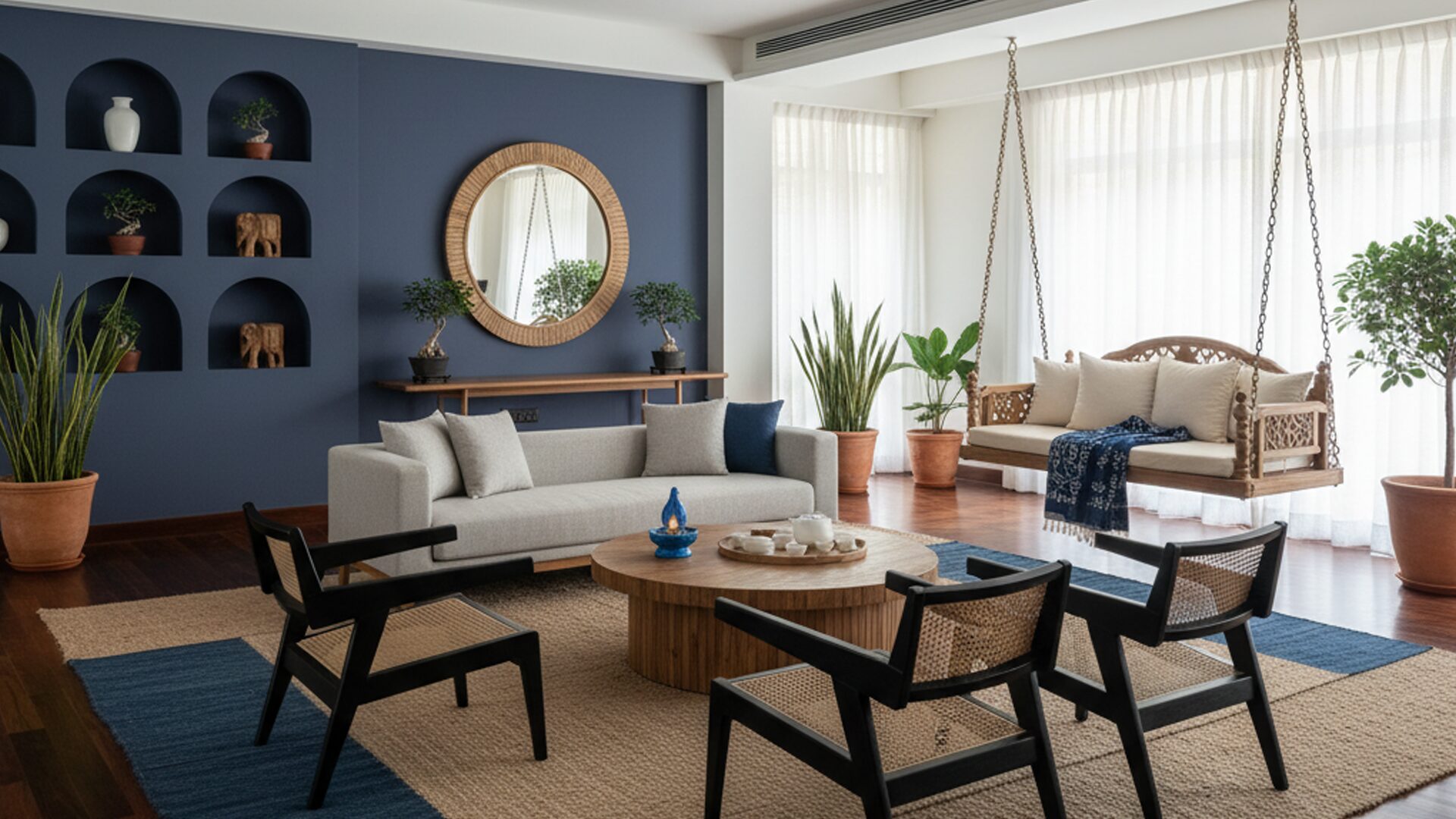
These days, luxury is about grace rather than dazzle. Japanese interiors are sophisticated and timeless and speak a quiet language of luxury. This style takes on even more significance in Indian homes. It creates a home that is both aesthetically pleasing and feels good by fusing mindfulness with craftsmanship and tranquillity with culture.
At Gruhanza, we believe every home should tell a story — one that is genuine, purposeful, and beautifully built. With high-quality materials, ideal proportions, and designs that express who you are, our talented designers can assist you in realising your goal of a house with a Japanese influence.
