
Which Is the Best Finish for Humid Indian Homes?
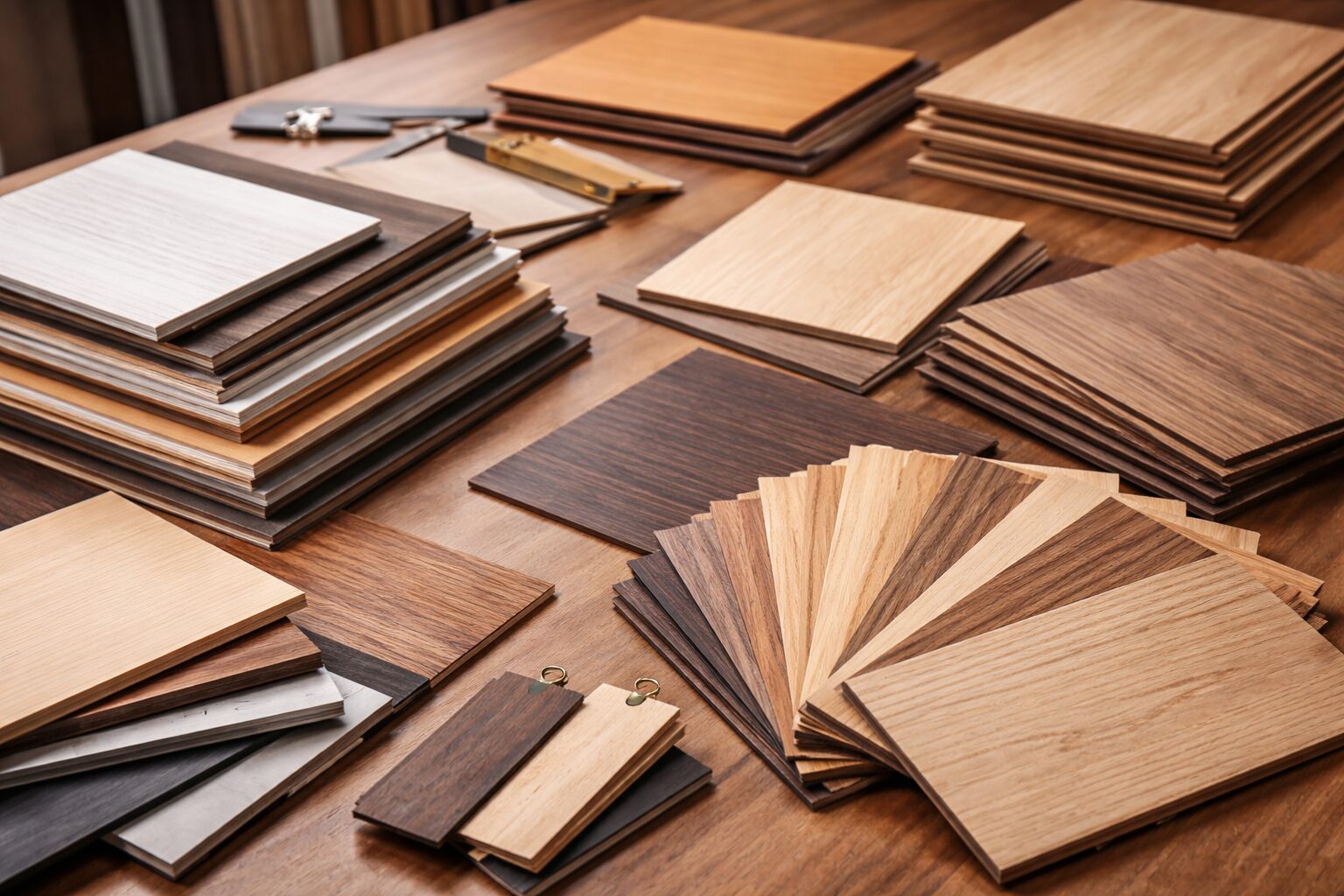
Premium laminates and natural veneers displayed side by side, showcasing rich wood grains, textures, and finishes, perfect for modern interior design, modular furniture, and custom home decor projects.
Choosing between laminate and veneer is not just a design decision, it’s a climate decision. In India, interiors face extreme summers, heavy monsoons, coastal humidity, and fluctuating temperatures. These conditions directly affect surface finishes.
If you’re researching laminate vs veneer India, this guide will help you understand which material performs better in real Indian homes, especially kitchens and wardrobes, and which offers long-term durability in 2026.
Understanding the Materials
What Is Laminate?
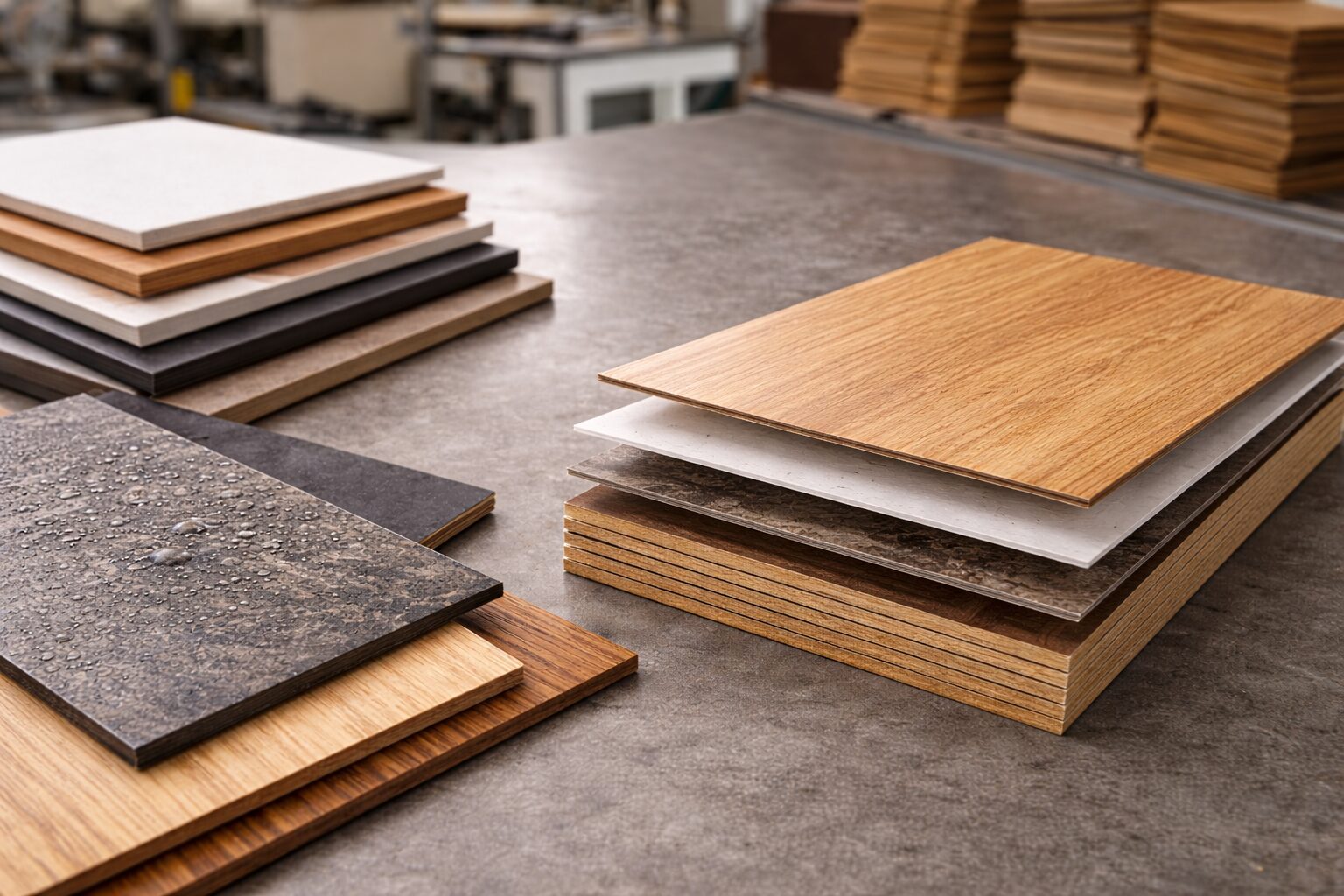
High-pressure laminate sheets in wood, stone, and matte finishes stacked in a workshop setting, showcasing the layered construction and durable, factory-manufactured surface ideal for scratch-resistant, moisture-resistant interior applications.
Laminate is a factory-manufactured surface made by compressing decorative paper layers with resin under high pressure. The result is a tough, sealed surface that resists scratches, stains, and moisture.
Modern laminates come in matte, gloss, textured wood grain, suede, and stone finishes. Because they are engineered products, they offer predictable performance in varying climate conditions.
What Is Veneer?
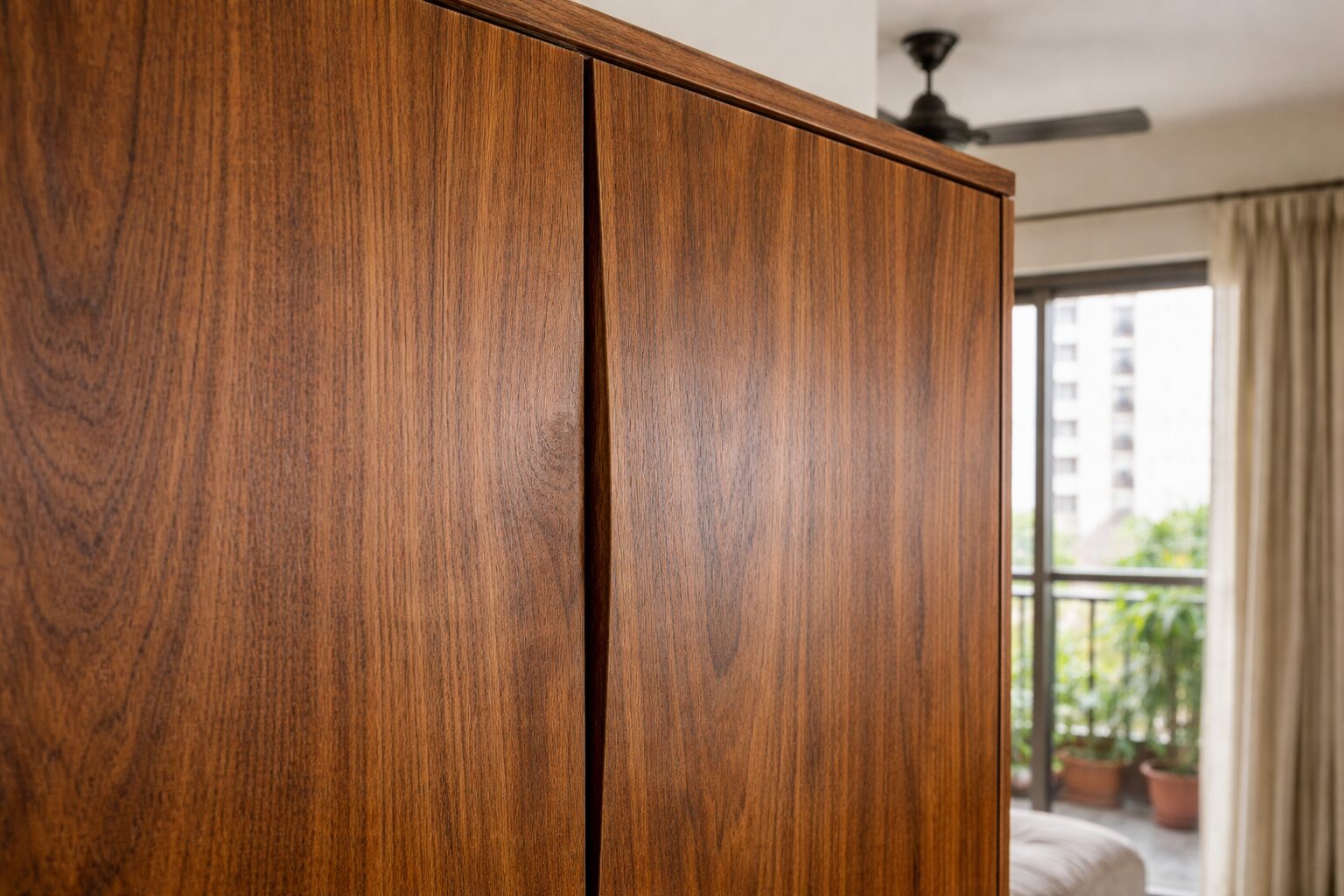
Natural Wood Veneer in Indian Homes
Veneer is a thin slice of natural wood bonded to plywood or MDF. Since it is real wood, it carries authentic grain patterns and warmth. Each sheet is unique.
However, because veneer is natural timber, it expands and contracts with humidity and temperature changes, something especially relevant in Indian homes.
Laminate vs Veneer India: Real Comparison for 2026
1. Moisture Resistance & Climate Performance
When discussing moisture resistant interior finishes, laminate has a clear technical advantage.
- Laminates are sealed surfaces.
- They resist swelling from humidity.
- They are less likely to warp during monsoon seasons.
Veneer, being natural wood, absorbs moisture. Without proper sealing and polishing, it can bubble, warp, or develop surface cracks in highly humid cities.
For humid environments, laminate is generally the best finish for humid Indian homes.
2. Performance in Kitchens & Wardrobes
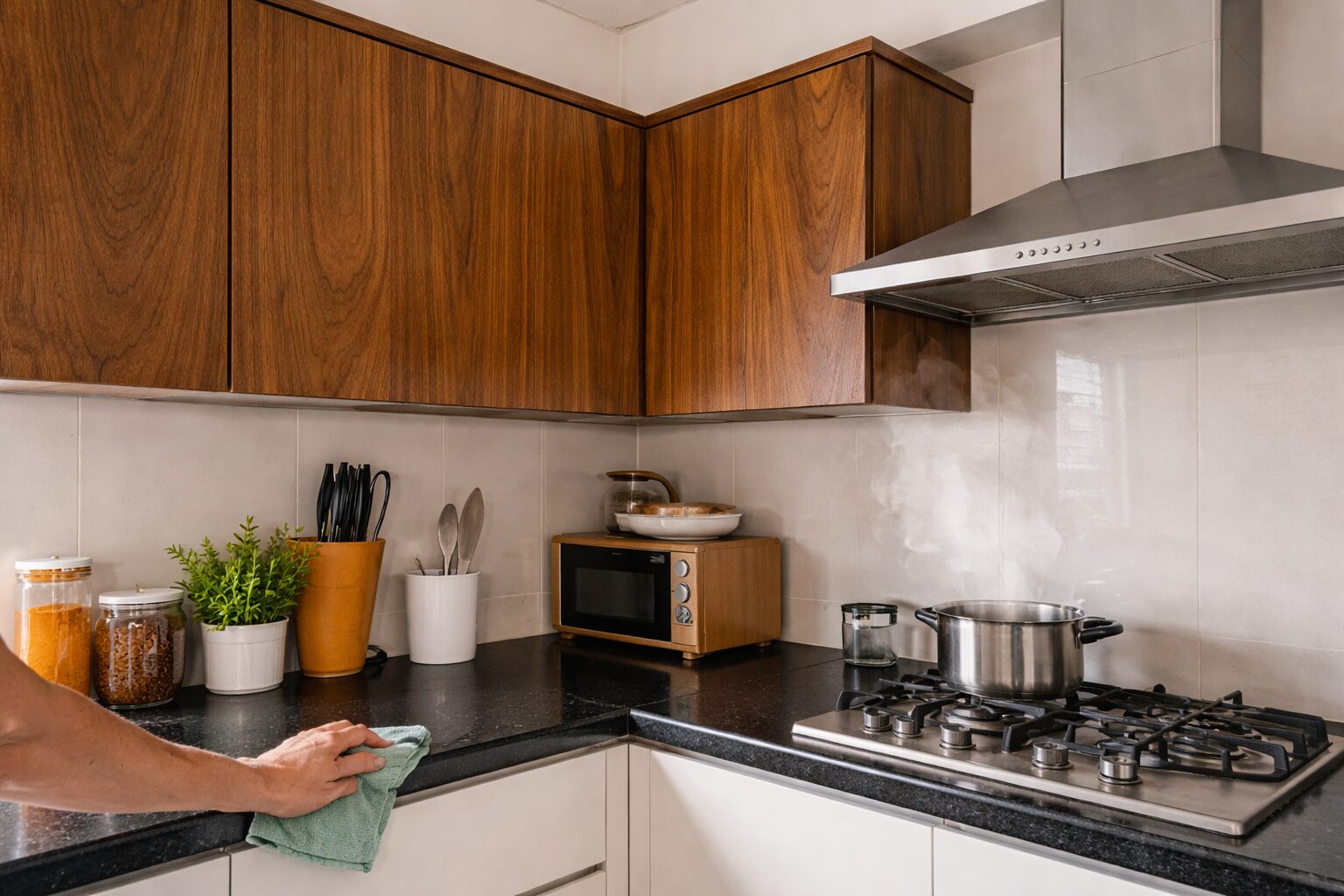
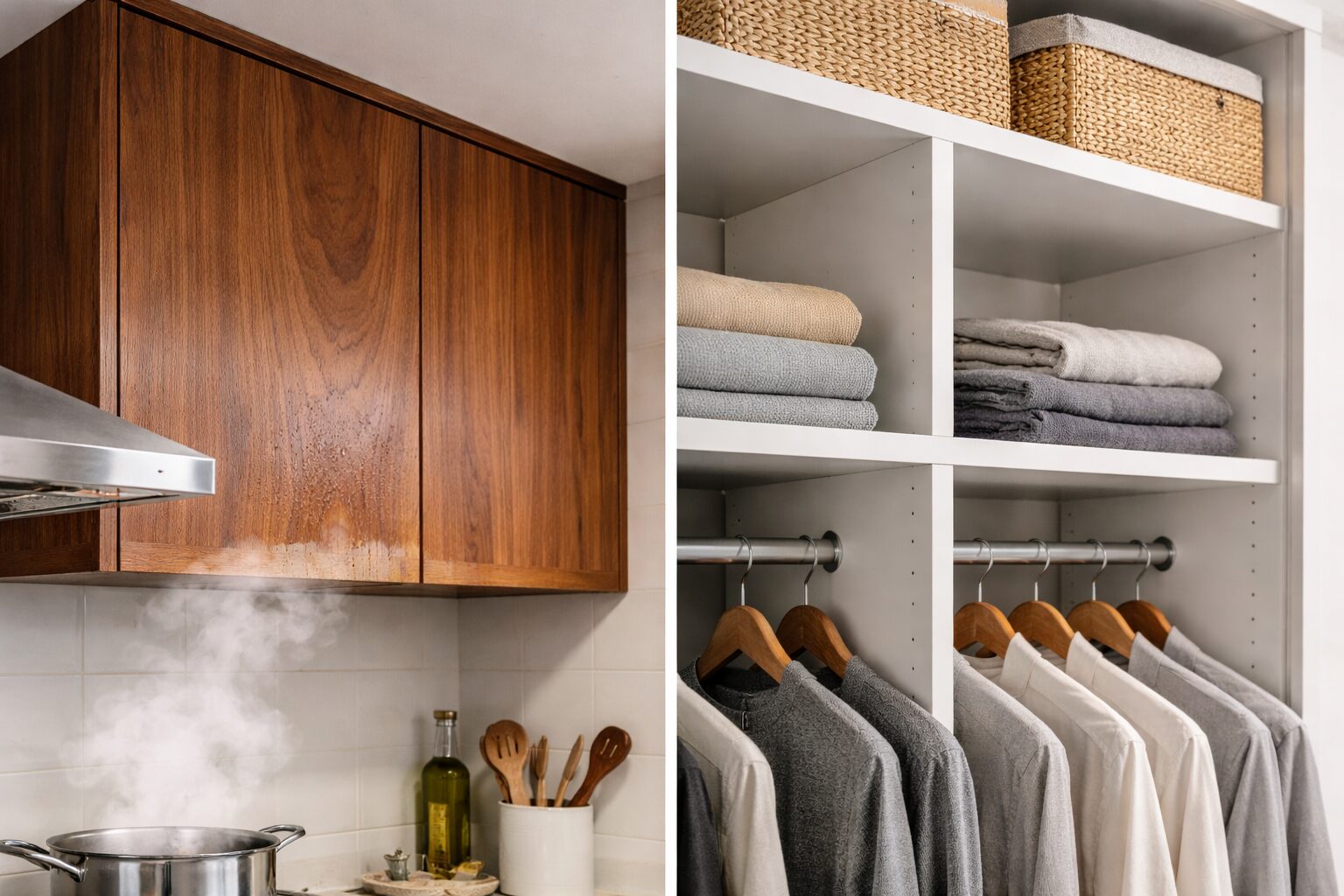
Laminate vs Veneer in Indian Kitchens & Wardrobes
If you are comparing laminate vs veneer kitchen wardrobes, consider daily exposure:
- Steam
- Oil splashes
- Frequent cleaning
- Temperature variation
Laminate handles all of this with minimal maintenance. Veneer in kitchens requires high-quality polishing and consistent upkeep.
3. Maintenance Requirements
Veneer:
- Needs periodic polishing
- Requires careful cleaning
- Can scratch easily
- May need refinishing after years
Laminate:
- Wipe with damp cloth
- No polishing required
- Scratch resistant options available
- Minimal upkeep
4. Durability & Long-Term Value
For homeowners looking at durable interior materials 2026, durability matters more than appearance alone.
- Laminate offers consistent surface performance and better suitability for high-traffic homes.
- Veneer can last long if maintained well but is sensitive to climate variation.
5. Cost Consideration
Laminate is generally more budget-friendly and offers a wide design range.
Veneer costs more because it uses real wood, requires polishing, and needs careful installation.
When Should You Choose Laminate?
- Moisture resistant interior finishes
- Low maintenance surfaces
- Budget efficiency
- High durability for kitchens and wardrobes
- Reliable performance in humid Indian climate
When Should You Choose Veneer?
- Authentic wood aesthetics
- Air-conditioned or climate controlled spaces
- Prepared for ongoing maintenance
- Formal living areas or feature walls
Final Recommendation for Indian Homes in 2026
For most Indian households, especially in humid or coastal regions, laminate offers stronger climate stability, lower maintenance, and better practicality.
Veneer remains a premium aesthetic choice, but it demands care.
A smart approach many designers follow in 2026:
- Use laminate in kitchens, wardrobes, and high-exposure areas.
- Use veneer selectively in living rooms or feature furniture.
This balanced approach ensures durability without compromising visual richness.
