
Trends change fast, but homes look best when they feel grounded. That’s why deep natural colours for Indian homes are having a strong moment, because they work beautifully with Indian light, Indian materials, and Indian lifestyles. Think warm terracotta, deep indigo, muted sage, and rich teak/coconut browns. These shades don’t shout. They settle a space, make it feel premium, and age well.
If you want a home that feels calm, warm, and intentional (without looking “too trendy”), this palette is one of the safest and strongest directions you can take in 2026.
Why Deep Naturals Work So Well in Indian Homes
Indian homes experience harsher light, higher dust, and stronger seasonal shifts than many global interiors. Bright whites can look flat by evening. Ultra-pale tones show stains faster. Overly cool greys can feel cold in monsoon light.
An earthy colour palette for Indian homes solves these problems because it:
- Feels warm even in low daylight
- Looks rich under warm LEDs
- Hides minor dust and marks better than pale shades
- Pairs naturally with wood, stone, cane, and brass
- Brings a “designed” look without heavy decor
The Core Palette: 4 Colours That Build a Premium Natural Home
1) Terracotta: Warmth that feels lived-in

Caption – Terracotta accent wall living room with teak wood tones and earthy decor, deep natural colour palette for modern Indian homes.
A good terracotta colour palette for home adds warmth and depth without becoming loud. It’s ideal if your space feels too cold or too plain.
Best places to use terracotta:
- Accent wall behind sofa or dining
- Foyer wall with a console + mirror
- Bedroom headboard wall (in softer terracotta)
- Balcony seating wall with natural textures
Pairs best with:
- Cream, warm whites, sand, and camel
- Dark wood, cane, brass, and linen textures
Tip: Choose terracotta in matte or soft sheen to avoid glare in Indian daylight.
2) Indigo: Calm, bold, and timeless
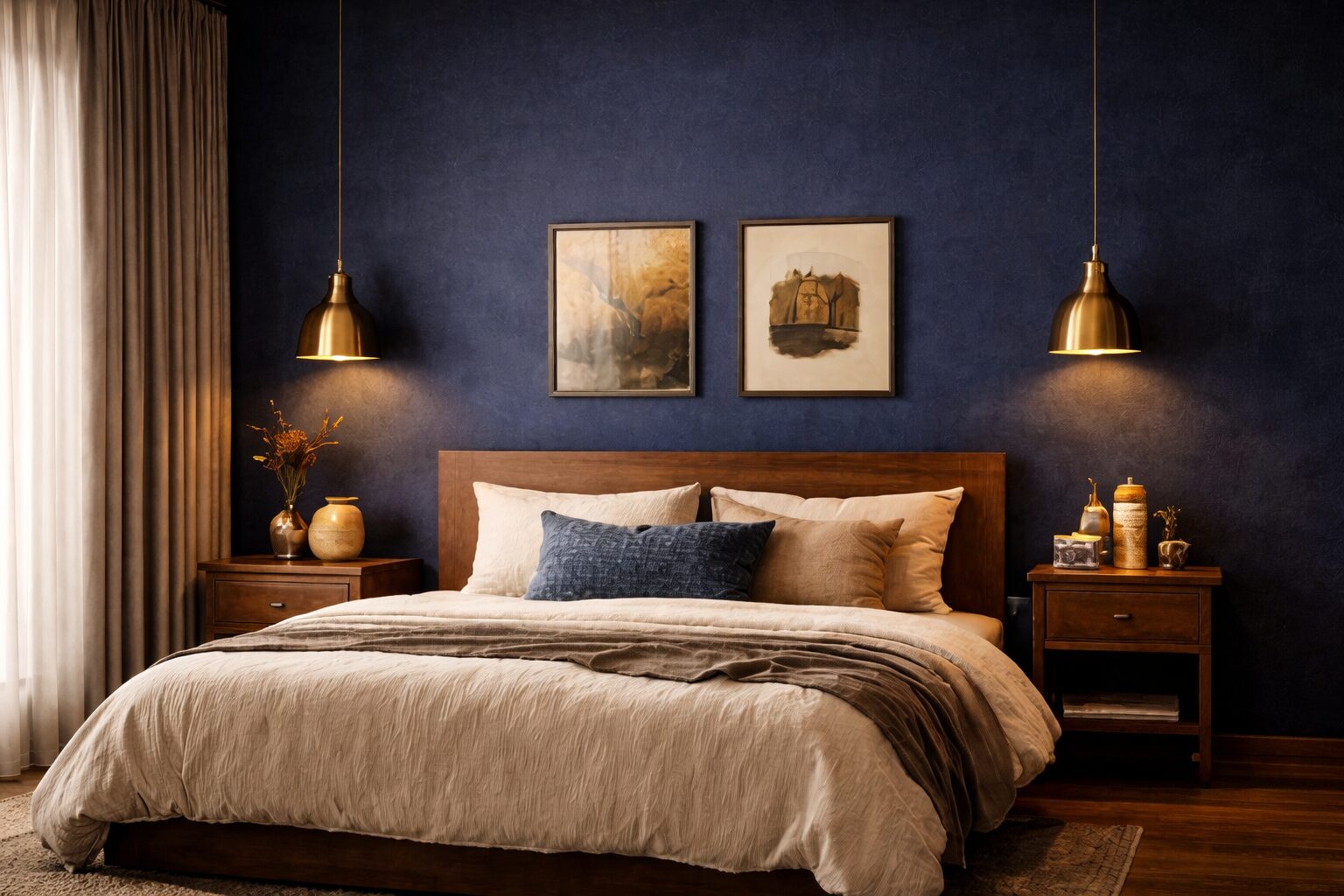
Caption – Indigo accent wall bedroom with warm lighting and teak furniture, timeless deep natural colours for elegant Indian home interiors.
An indigo wall colour for Indian homes creates instant character. It’s one of the easiest ways to make a room look expensive, especially when it’s balanced with warm neutrals and good lighting.
Best places to use indigo:
- TV wall with warm backlighting
- Study room wall behind desk
- Dining wall with art and spotlighting
- Powder bathroom for a boutique feel
Pairs best with:
- Off-white, warm beige, taupe
- Walnut/teak tones, matte black, antique brass
Tip: Indigo looks best with layered lighting — use wall washers, picture lights, or warm spotlights.
3) Sage: Soft luxury without being “too green”
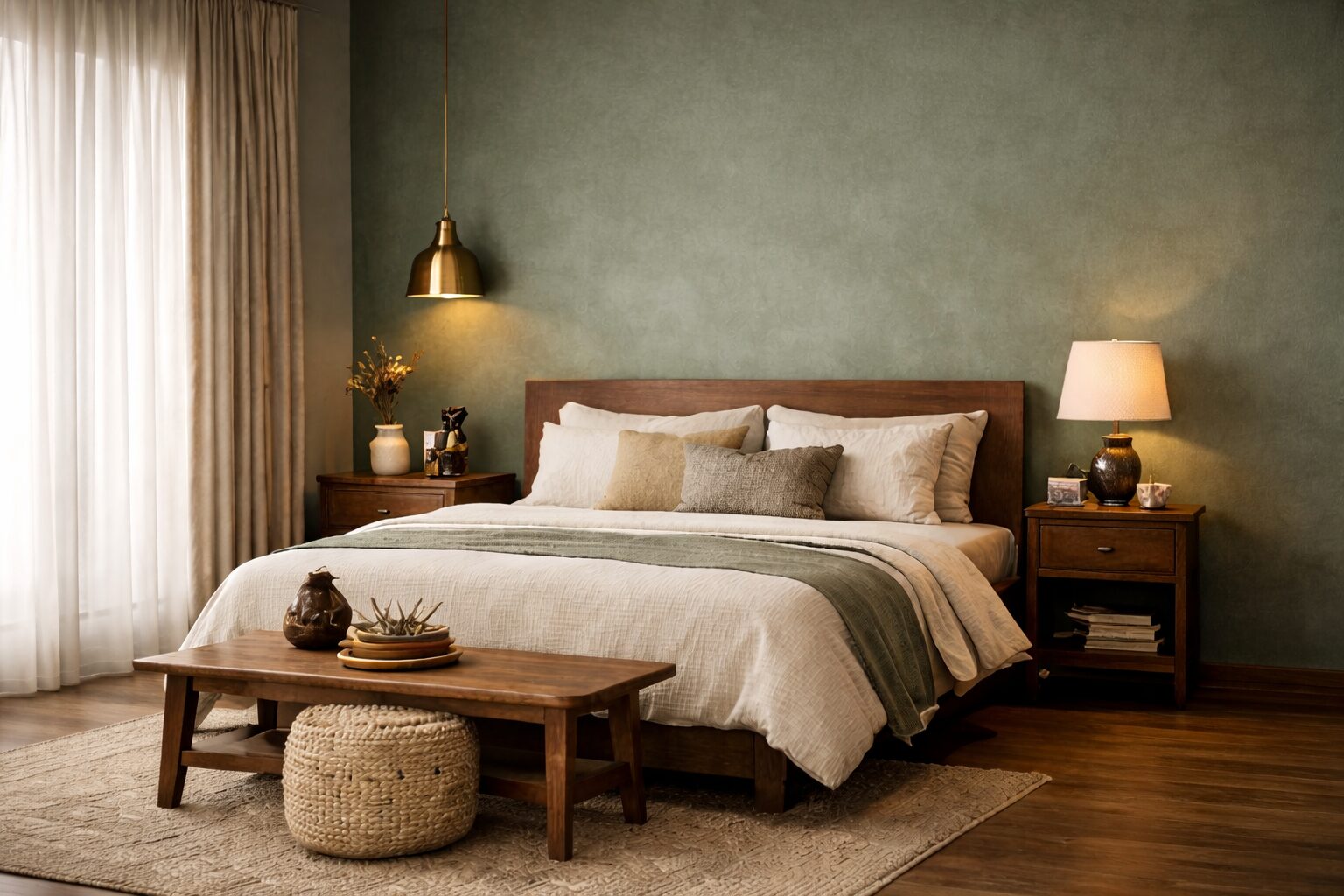
Caption – Sage green bedroom with warm wood furniture and soft neutral linens—deep natural colour inspiration for calm, premium Indian home interiors.
Sage green interiors are perfect for homeowners who want colour, but still want calm. Sage works especially well in bedrooms and family spaces because it reduces visual noise and adds softness.
Best places to use sage:
- Bedroom walls (full room or one wall)
- Kitchen cabinets (upper cabinets in sage, base in warm wood)
- Kids’ room (muted, not neon)
- Study corner for a relaxed work vibe
Pairs best with:
- Warm whites, light oak, teak
- Terracotta accents, tan, and brushed gold hardware
4) Teak/Coconut Browns: The foundation of the “natural luxury” look
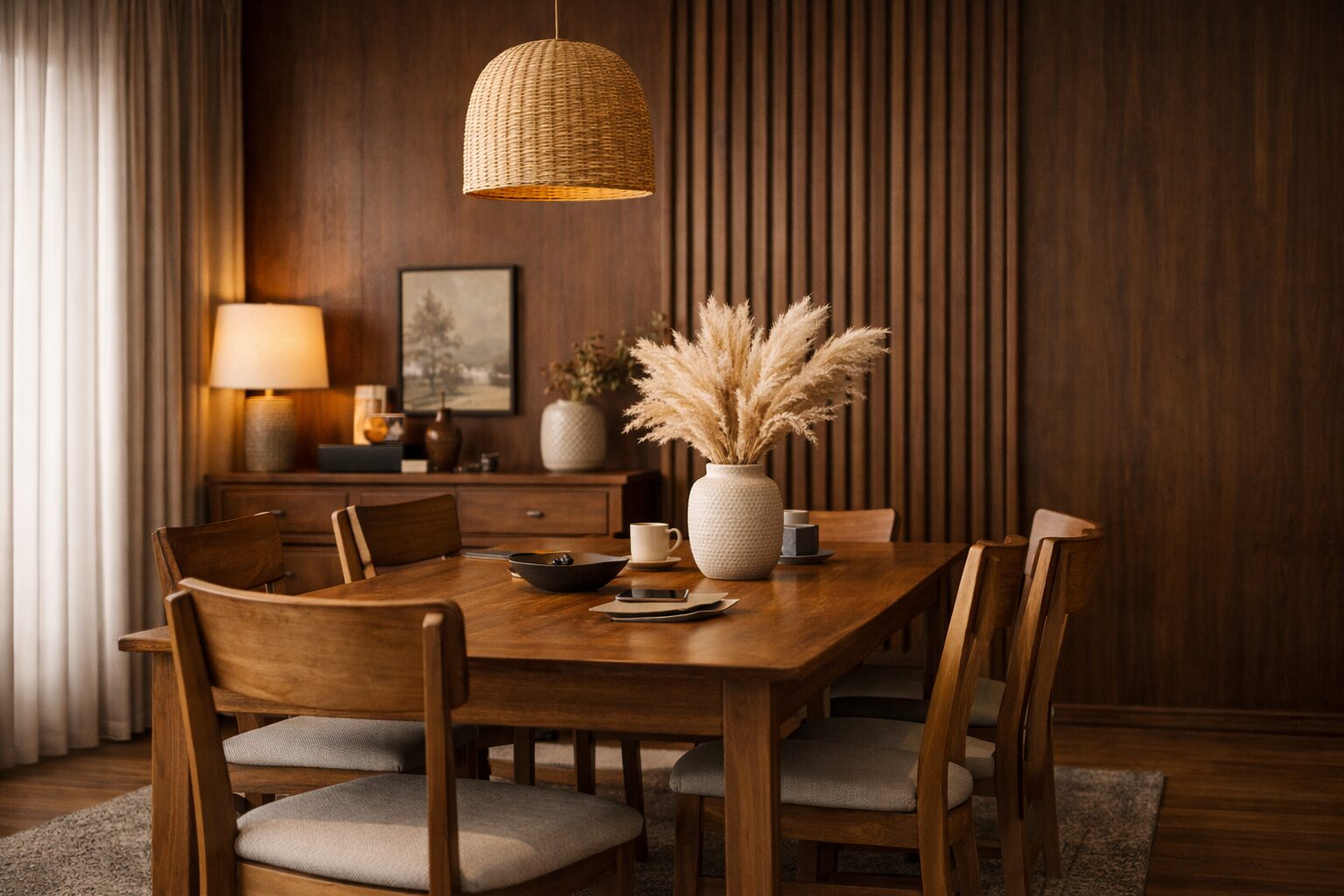
Caption – Teak-toned dining room with rattan pendant light and fluted wood wall, warm brown interiors that bring natural luxury to Indian homes.
Rich browns are back, but now they’re used with restraint. Teak brown interiors and coconut-toned browns create grounding. They add the “expensive” base that makes other colours look intentional.
Best ways to use warm browns:
- Wardrobe shutters in wood-tone laminate/veneer
- Fluted panels, skirting, or wall trims
- Doors, headboard frames, and furniture
- Textiles: rugs, cushions, throws in cocoa/caramel shades
Colour Combinations That Work in Real Indian Homes
- Terracotta + Warm White + Teak Brown – Best for living rooms and dining rooms
- Indigo + Beige + Walnut/Teak – Best for TV wall, formal living, study
- Sage + Cream + Brass Accents – Best for bedrooms, calm family spaces
- Sage + Terracotta Accents + Natural Wood – Best for modern Indian homes that want warmth
- Indigo + Warm Grey + Coconut Brown – Best for apartments with strong daylight
- Terracotta + Sand + Matte Black Details – Best for contemporary homes with clean lines
Where to Use Deep Naturals (Room-by-Room Guide)
Living Room
- One feature wall in indigo or terracotta
- Keep remaining walls warm neutral
- Add wood tones through TV unit, side tables, or wall panels
Bedroom
- Sage is the easiest full-room colour
- Terracotta works best as a single headboard wall
- Indigo works well for a premium master bedroom when paired with warm lighting
Kitchen
- Use sage in cabinets (or backsplash accents)
- Balance with warm wood + neutral counters
- Prioritise finishes that are easy to clean
Foyer
- Terracotta or indigo makes the entry feel designed instantly
- Add mirror + warm light + simple console styling
Paint Finish Tips for Indian Conditions
- Matte looks premium but can mark easily in high-touch areas
- Satin/eggshell is a practical choice for living rooms and bedrooms
- For kitchens and kids’ rooms, choose washable paints with easy wipe-clean performance
If you’re evaluating best wall colours for Indian climate, also evaluate washability and lighting, because both affect how the colour will age.
Final Takeaway
If you want a home that looks premium, calm, and timeless, deep natural colours for Indian homes are a strong direction. Terracotta brings warmth, indigo adds depth, sage adds softness, and teak/coconut browns anchor the space. Used thoughtfully — one statement wall, warm neutrals, layered lighting, and natural textures — this palette creates “quiet luxury” that still feels Indian and livable.
